


A creative process. Not a shortcut around it.

Creative follows the work from brief through tensions and directions to a locked concept, then executes it as script, storyboard, key visuals and film. A judge checks the craft all the way, and the client approves per direction on a single link.

Phase 1 · From brief to concept

The thinking, with every thought kept.

Strategy and ideas are still hard, and they will stay that way. This journey is built on the moves a strategist actually uses: brief, tensions, working hypothesis, directions, concept. Each step builds on the last, and nothing evaporates between meetings.

Creative · Brief

The brief is the core document. Even when it changes.

Paste in the client’s material, even when a PDF export has mangled it, and Launchr AI rebuilds it as a readable brief. You edit and lock it. If the brief changes later, the edit becomes a new version in the chain, so you can always see exactly which foundation the directions were built on.

Brief · Spring campaign
Version 3 · Locked

The task

The category talks price. The client wants to own the opposite: the calm of having chosen right once.

Audience: 30 to 55Channels: TV, OOH, print

Version chain

  • v3Budget and channels updated
  • v2Client edits after the meeting
  • v1Built from pasted material
Creative · Tensions

The contradictions are the raw material.

Launchr AI reads the brief and finds the tensions a concept can rest on: places where category, audience and reality pull in different directions. You mark the ones worth keeping, and they stay on the project as working material, not a fleeting brainstorm.

Tensions · Found in the brief
2 marked
  • Everyone in the category shouts about price, but customers stay for the calm, not the discount.

    Interesting
  • The product is bought once every ten years but has to be remembered every day.

    Interesting
  • The audience trusts tradesmen, not ads.

The marks stay on the project. No fleeting brainstorm.

Creative · Working hypothesis

One sentence to stand on.

From the tensions you marked, the engine proposes working hypotheses: takes on what the campaign should make people believe or do. You pick one and pin it to the project. It travels along as the reference point for everything built after it.

Working hypotheses
Pinned as the reference point

If we own the calm of having chosen right, we never have to compete on price.

  • If the tradesman is the sender, we borrow the trust advertising can’t create on its own.
  • If the product is invisible in daily life, the absence of problems is the story.
Creative · Directions

Five to ten directions. Not the same one three times.

The engine develops between five and ten creative directions on the hypothesis, and the judge rejects the set if three of them are the same move in new wrapping. You write along, pick and discard, and what you discard becomes fragments that can be picked up again. Nothing is deleted.

Directions · 6 proposals
Judge: no duplicates
  • The calm after the choice

    Chosen

    Core device: we never show the product, only the life on top

  • The tradesman’s word

    Maybe

    Core device: the professional says what the brand can’t say itself

  • Ten years without thinking about it

    Fragment

    Discarded, saved as a fragment

Fragments can be picked up again. Nothing is deleted.

Creative · Concept

A judge for the craft. Never for taste.

Before a concept reaches you, a machine judges the craft: is it a core creative device or just a campaign line, does it say something concrete or agency filler, is anything made up about the client, and does the language follow the brand’s own rules. It never judges whether the idea is good. That is your craft. And every change to the concept is saved as a version you can undo to.

The craft judge
No score, no taste
  • Core device, not a campaign line
  • Concrete, not agency filler
  • Faithful to the client’s material
  • Clean language by the brand’s rulesFix

Judge’s note: a banned brand word in line 2. The next attempt builds on the note.

Revision 4 of 4Restore earlier version
Phase 2 · From concept to material

The concept becomes something you can see.

The locked concept is executed on the same engines as the rest of the platform: script drafts, storyboard, key visuals for print and OOH, and a finished film. Every image and every clip passes a quality guard before it is shown to you.

Creative · Script

Script drafts, not one script.

The engine writes several script drafts on the direction, so you have something to choose between instead of something to be locked into. You edit freely, and the draft you lock becomes the foundation for the storyboard. The judge reads here too: markdown, filler words and the brand’s banned words don’t slip through.

Script drafts · The calm after the choice
3 drafts
Draft 2 · Locked

“We open on a Sunday morning: the rain pours down, the couple sleeps in, and the house takes care of itself.”

  • Draft 1 · The tradesman as narrator
  • Draft 3 · Ten years cut to ten seconds
Creative · Storyboard

Every image is checked before you see it.

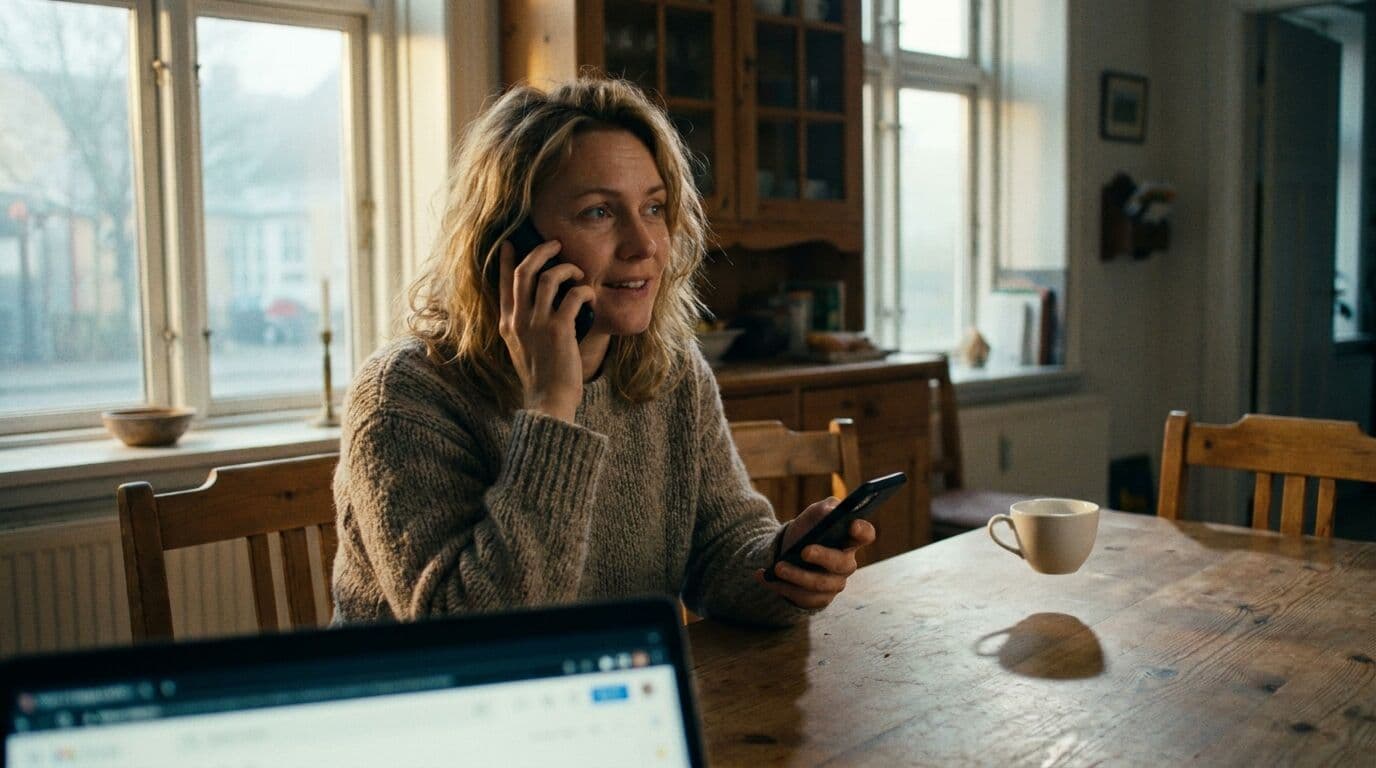
The script becomes scenes with a visual side, and every image is generated with a guard in front. The critic scans each image for AI slop: five fingers on every hand, gravity that holds, faces that match the cast. A rejection comes with a concrete note the next attempt builds on, before anything is shown to you.

Scene 3 · The critic looks first
AI-generated still with deliberate mistakes: a woman at a kitchen table holds a phone in each hand, and the coffee cup floats above the tableAttempt 1
Rejected

Two phones on the same person. The coffee cup floats above the table.

The same scene, now correct: the woman holds one phone to her ear, and the cup sits on the tableAttempt 2
Approved

The cast matches the portrait. Objects rest naturally.

Creative · Key visuals

One image that can carry an entire campaign.

For print and OOH, the engine builds key visuals per direction, in the formats the brief points to. The headline is placed as a real text layer, not generated into the image, so the typography stays razor sharp on a bus shelter poster. And the same critic reviews every visual before it reaches you.

Key visuals · The calm after the choice
Print + OOH
Calm Danish sofa corner in evening light, key visual generated by the platform's image engine

Chosen right.
Once.

Bus shelter · portrait
Morning light over a Danish kitchen table, key visual generated by the platform's image engine

Not a thought about
it since 2016.

Full page · print

The headline is a real text layer in the brand’s typography, not generated into the image.

Creative · Mockups

See it hanging in the city before it’s printed.

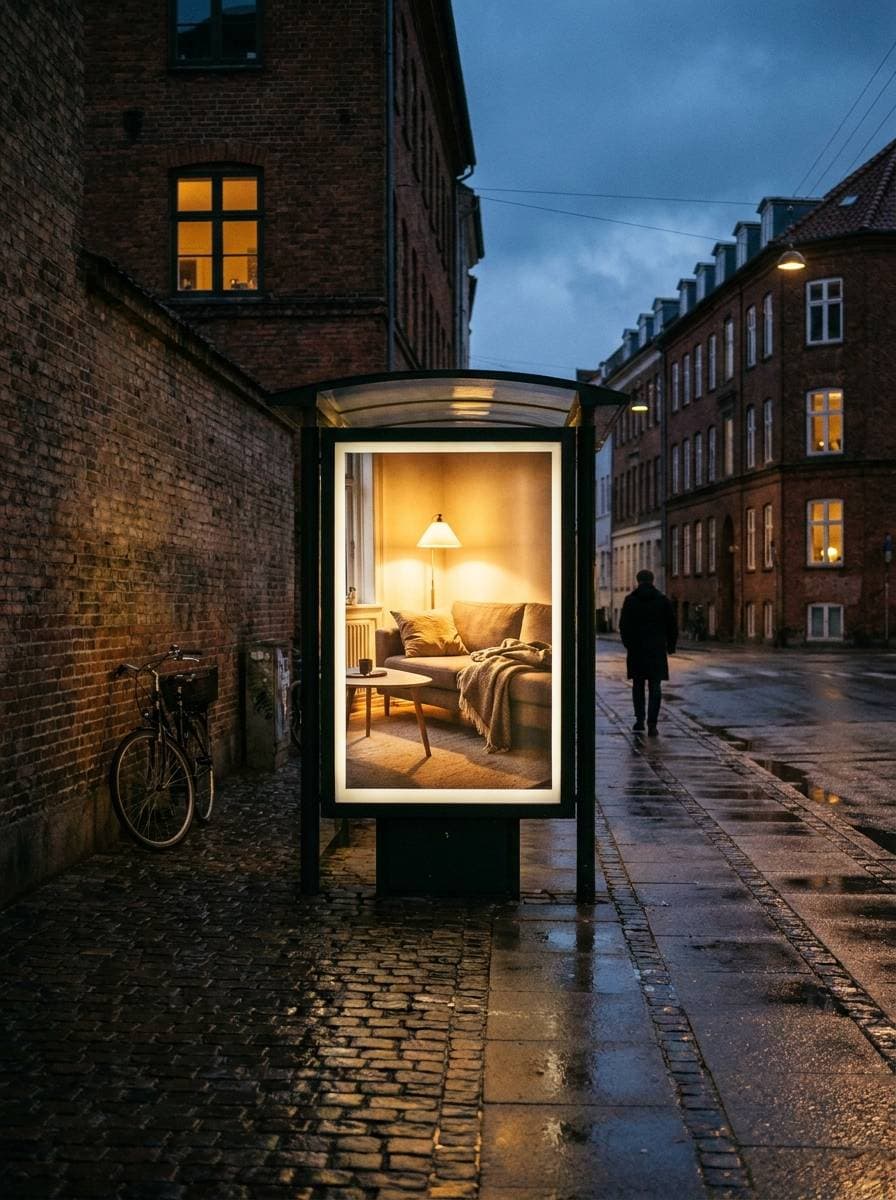
Pick a key visual, and the mockup engine places it in a photographic setting: a bus shelter in the streetscape, ready for the presentation. The client doesn’t see a file in a meeting room, they see their campaign out in the world.

Mockup · Bus shelter in the streetscape
Rain-slicked Danish street corner at blue hour, with the key visual hanging as a poster in a lit bus shelter, generated by the platform's mockup engineGenerated by Launchr AI

The client sees the campaign out in the world, not a file in a meeting room.

Creative · Film

A film that is judged before it’s delivered.

The storyboard’s images become clips, and every clip is reviewed by a judge that watches the actual video: motion, style match, cast and scene credibility. If any one of them fails, the clip is redone and the better of the two is kept. Finally, clips, voice, music and logo outro are rendered into one finished MP4.

Scene 3 · The clip is judged3.2 sec
Motion
8 / 6
Style match
9 / 7
Cast
9 / 7
Scene credibility
8 / 7
spring_campaign_30s.mp4Ready

Clips + voice + music + logo outro, rendered in one file

Creative · Share with the client

The client approves per direction.

Send one link where the client reads each direction with its core device, rationale and script drafts, and approves or requests changes per direction. If you edit the text after an approval, the direction falls back and must be approved again, so an approval never covers something the client hasn’t read. The same content can be delivered as a PDF presentation.

launchr.dk/share/7f3k

Presentation · 3 directions

The client approves per direction

  • The calm after the choiceApproved

    Approved by Charlotte · today at 09:14

  • The tradesman’s wordChanges

    “Can the core device carry without a well-known tradesman?”

  • Ten years without thinking about itText changed · approve again

If the text changes after an approval, the direction falls back. An approval never covers something the client hasn’t read.

The principle

Your edit always wins.

Anywhere in the platform, you can change what the engine made, and your change stands. It won’t be overwritten on the next run, and you won’t wrestle a tool that thinks it knows better. The AI facilitates. The human decides.

Creative · The craft

Built on the moves a strategist actually uses.

The journey follows the moves a strategist already uses, and nothing falls through the cracks between meetings. Launchr AI is our secret sauce. The models are the car. Launchr AI sits beside you and knows the road. And you’re the one with your hands on the wheel.

The judge rules on craft, not taste

The machine decides whether a proposal is a core creative device, whether it says something concrete, whether anything is made up, and whether the language follows the brand's rules. Whether the idea is good, it never decides. There is no score and no ranking.

Nothing is deleted

Discarded directions become fragments that can be picked up again, and every change to the concept is saved as a version you can restore. The brief carries its own version chain. You can always see what something was built on.

The brand rides along in every engine

The client's banned words, language rules and visual identity live as rules inside the text, image and film engines, not as a note in a document. The judge enforces them before anything reaches the client.

The tools

Six tools that share the same engine.

These aren’t six disconnected apps. The image engine, the voice engine and the quality guards are the same everywhere, so an improvement in one place lifts all the others the same day.

Koncepter

The concept journey above: brief, tensions, working hypothesis, directions, concept, and the execution as script, storyboard, key visuals and film.

Akademi

Training and instruction videos in the brand's own world. A fixed cast with reference portraits, fixed settings, optional subtitles, and a judge that reviews every clip before it becomes a film.

Radioreklame

Radio ads: script, a legal check against Danish marketing law, a recorded or generated voice, and a broadcast mix in EBU R128. The speaker's raw recording is split automatically into takes per line, so you pick the best one.

Podcast

Record on your phone. The platform cleans the audio, lifts the voice, builds intro, outro and music bed in one sound world, creates cover art and show notes, and publishes to Apple Podcasts and Spotify.

Tekstforfatning

Web copy: pull in an entire website, block by block, prioritize the pages and rewrite them under a fixed style and tone profile. The copywriter edits in their own link, the client approves in theirs.

Sound Studio

New sound for a film that is already cut, even when you have no stems. The voiceover is extracted from the finished mix, then a new script and a new voice are timed against the scene changes and mixed back in. The video track is untouched.

Next

The concept doesn’t stop at the concept.

A locked concept can cross the bridge to production, to radio spots and to copywriting. The bridge freezes the concept the moment it’s crossed, so a later sharpening never quietly rewrites the foundation under something the client has already approved.

The bridge to production

Production

One concept becomes one film. Script and storyboard are already there when the production opens, and from there follow cast, location, crew, call sheet and the entire post production.

Read more about Production

The bridges to the tools

Radioreklame and Tekstforfatning

The same concept routinely becomes several radio spots, in 15, 20 and 30 seconds, and a style and tone profile the copywriting tool writes under. The bridge can be crossed several times, and the page shows what has already grown out of the track, so nobody makes a duplicate blind.

Try it on your next brief.

Sign up yourselves and pay only for what you build. If you work at a Danish media or ad agency, or a production company, and have a brief on your desk, we’re also happy to set you up personally.